
David Madero: Metal Art and Fabrication
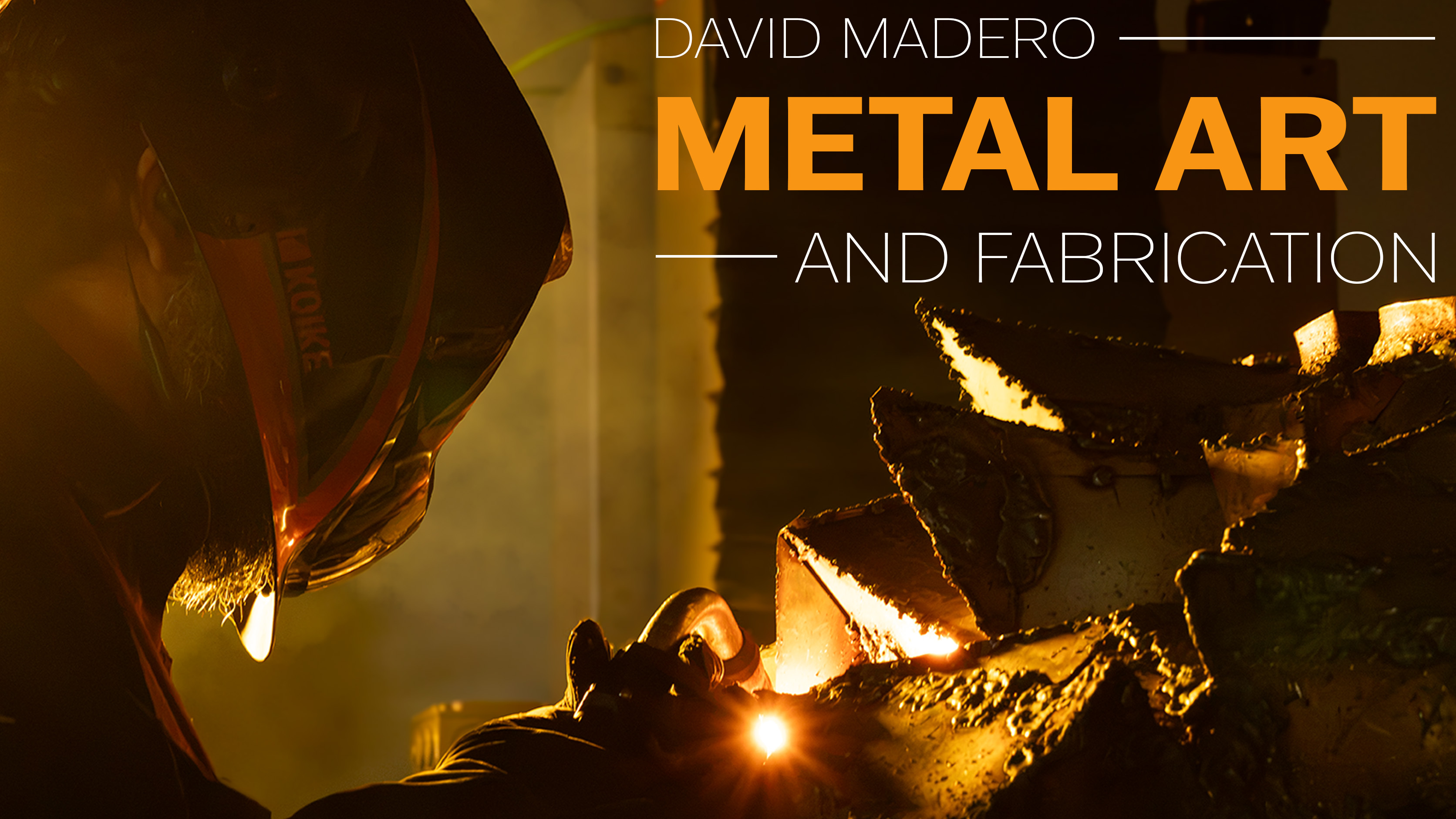
For most fabricators, metal is a material to be measured, cut, formed and welded into something functional. Put that same material in the hands of metal sculpture artist David Madero, and it can become something entirely different.
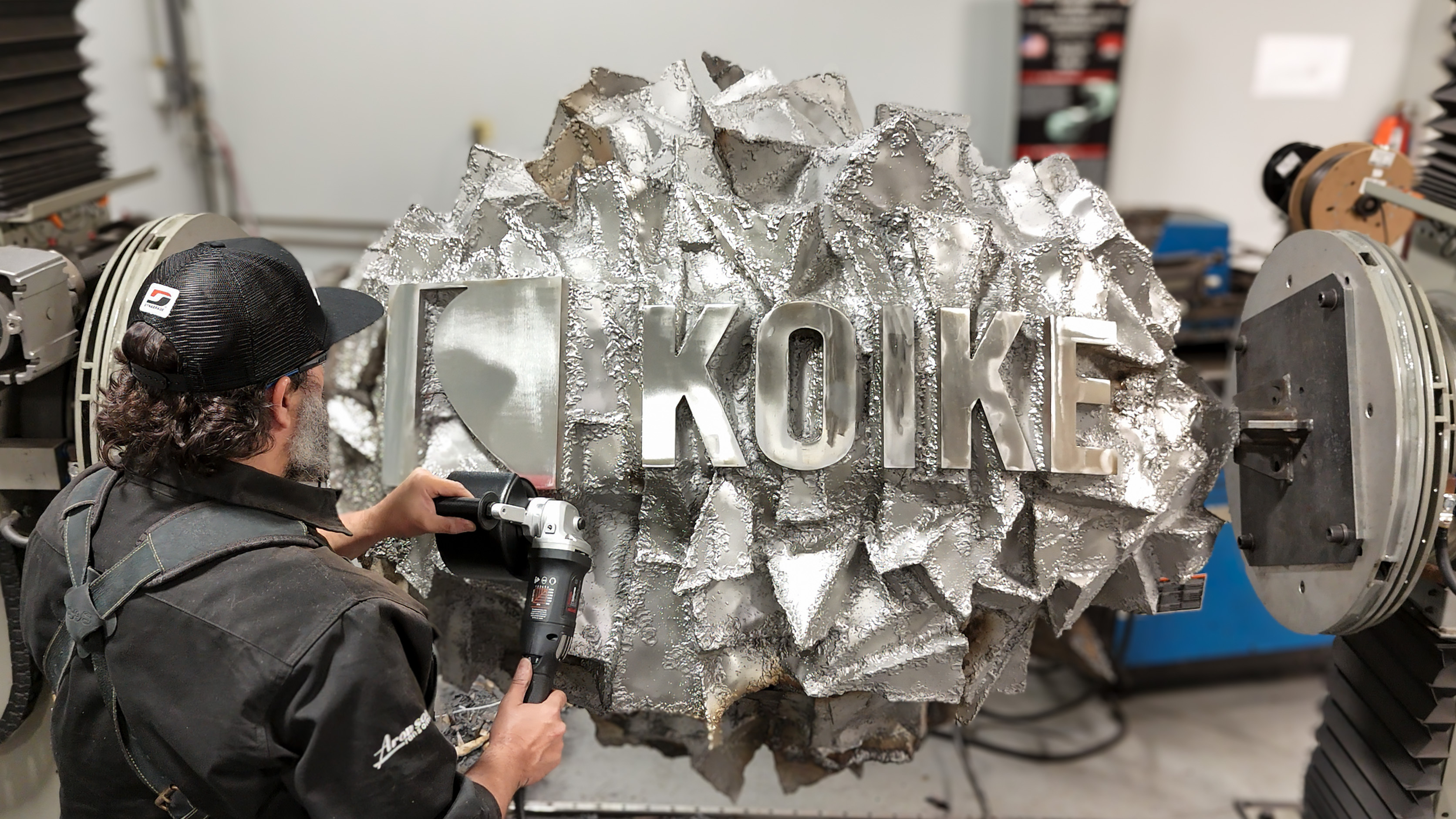
During a special project at Koike Aronson, Inc. headquarters in Arcade, New York, David transformed stainless steel into a more than 800-pound sculpture that brought together traditional craftsmanship, CNC plasma cutting, hand plasma cutting and weld positioning technology.
For David, the project also meant stepping outside his own comfort zone.
Despite decades of experience creating metal artwork, this was his first opportunity to incorporate CNC plasma cutting into his artistic process and to use a large welding positioner to rotate and elevate a sculpture as it grew.
A Lifetime Shaping Metal
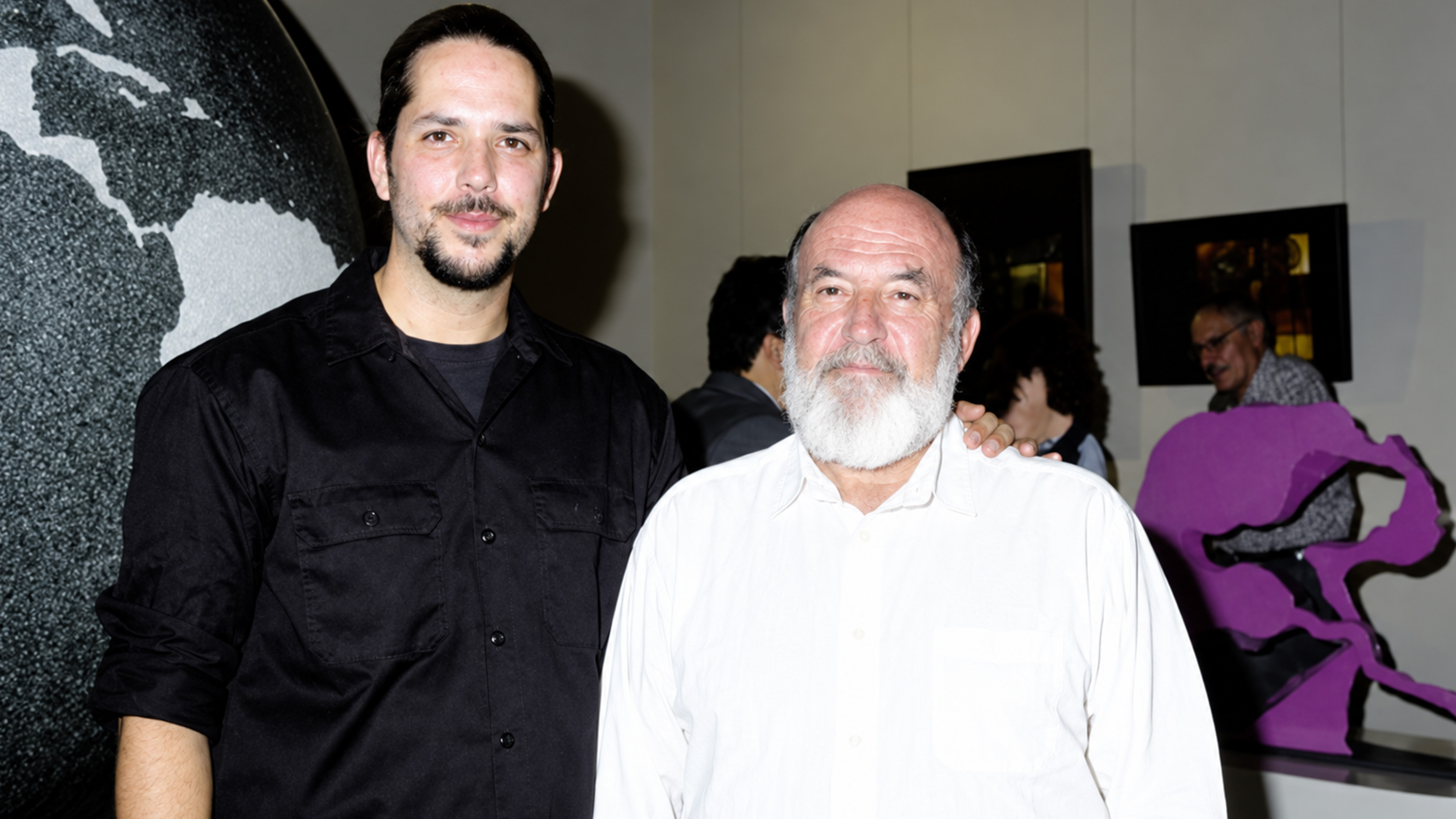
David and his father, Rogelio (Circa 2008).
David Madero is a sculptor, welder and designer whose connection with metal began at an unusually young age.
His father, Rogelio Madero, was an accomplished sculptor and an early pioneer of welded metal art. David began working with metal at 5-years-old, learning the art of welding and sculpture by watching and working alongside his father.
That experience developed into a career centered around monumental sculptures and highly detailed metal artwork. His projects have included the Eagle and Serpent representing the Mexican Coat of Arms, created for the official residence of the President of Mexico, along with other large-scale public and private sculptures.
David is also recognized as a judge and co-host on Netflix’s Metal Shop Masters, where competitors use welding, cutting, and fabrication skills to create original metal projects.
But television only shows part of the story.
Madero remains a fabricator at heart, creating sculptures that are often bold, textured, and full of movement. Rather than hiding every weld, he frequently allows the welding and fabrication process itself to become part of the finished appearance.
As a metal sculpture artist, he combines technical skill with experimentation. Welding, plasma cutting, grinding, polishing and forming all become tools for communicating ideas.
Why This Sculpture?
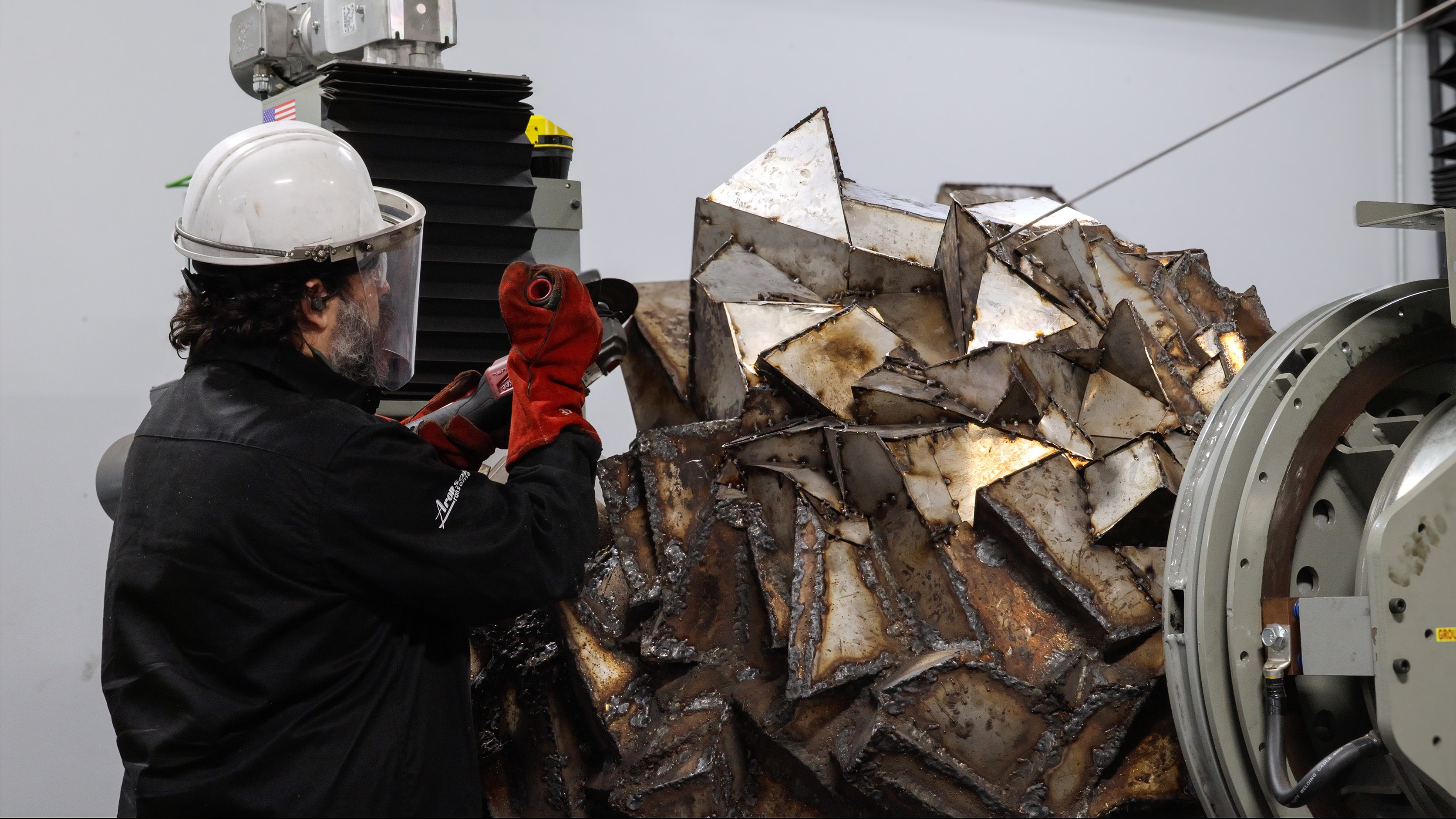
The sculpture was a natural fit for Madero’s style because its organic form gave him freedom to work without being confined by straight lines or conventional geometry.
Each stainless-steel section could be cut, shaped, fitted, and welded into place until the sculpture developed its final form.
The result is metal artwork that appears almost shaped by nature, even though it was created through fabrication skill, welding experience, and modern cutting technology.
There is also a deeper connection to Koike.
For more than 100 years, Koike has supported the people who shape metal into the products that keep industry moving.
This sculpture represents what metal fabrication has always been about: taking raw material and transforming it through skill, heat, technology and imagination.
CNC Plasma Cutting Meets Hand Fabrication
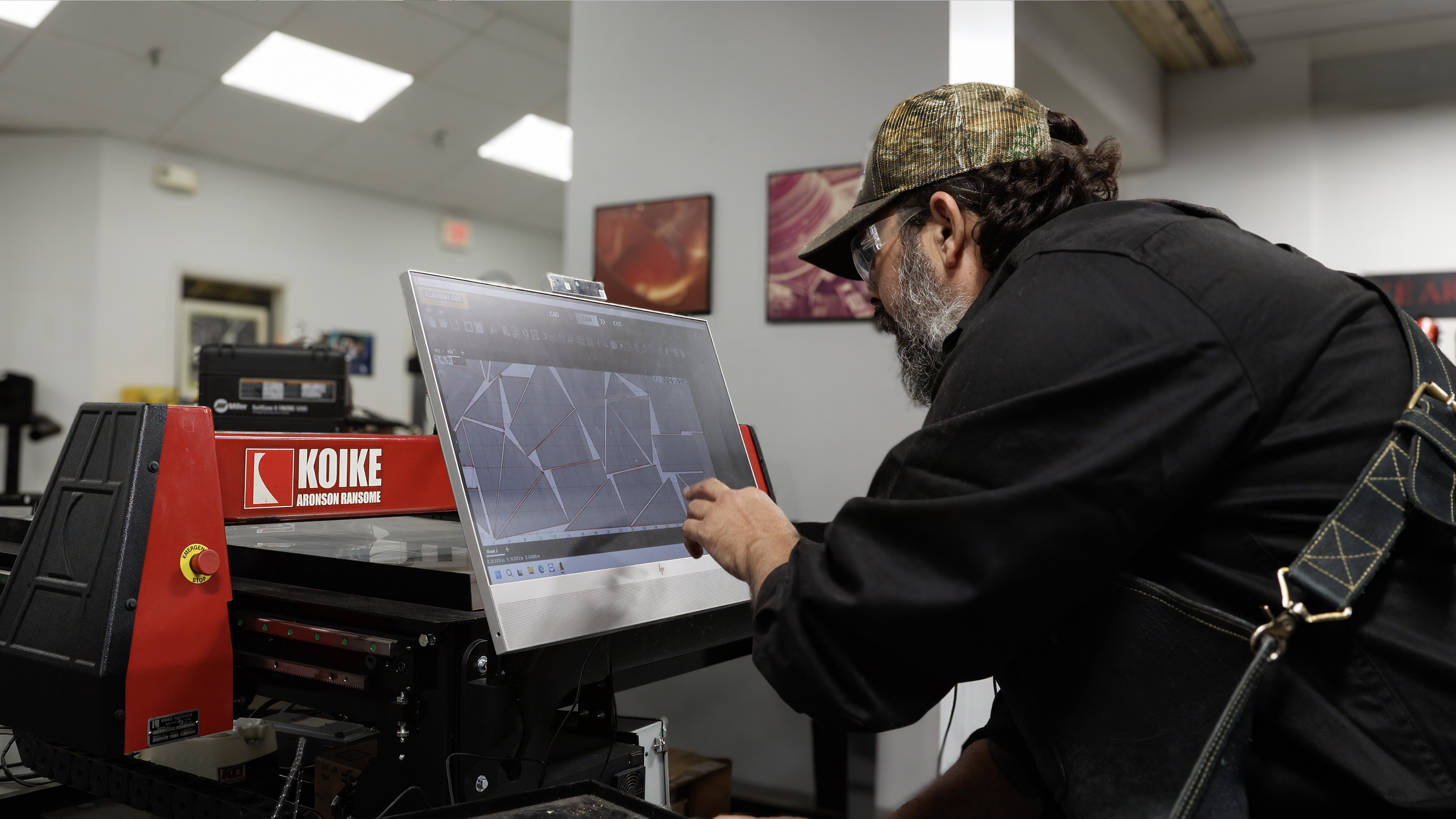
For the first time in his artwork, Madero used CNC plasma cutting to help produce stainless-steel parts for the sculpture.
Using a Koike ShopPro CNC plasma cutting machine equipped with a Hypertherm Powermax85 SYNC, Madero created programmed shapes that became the starting point for individual sections.
After the initial cuts, he continued shaping the parts by hand with a Hypertherm Powermax30 AIR plasma cutter, trimming and modifying them as the sculpture developed.
That combination demonstrates something important about modern fabrication: automation and craftsmanship do not have to compete.
CNC technology can provide speed, consistency and repeatability. The artist still decides what happens next.
That balance of programmed cutting and hand shaping is part of what makes plasma cut metal art so interesting. Technology creates possibilities, but the fabricator still brings the idea to life.
Moving 800 Pounds Instead of Working Around It
As the sculpture grew, another challenge became obvious: how do you efficiently work on something weighing more than 800 pounds?
David used a Koike MD Head and Tailstock positioner to rotate and elevate the sculpture, bringing different areas into more practical positions for fitting, welding and finishing.
The idea is simple: bring the work to the welder instead of forcing the welder to work around the part.
Better positioning can reduce unnecessary bending, reaching and climbing while making it easier to maintain a productive working position.
Don’t Keep Artistic Secrets
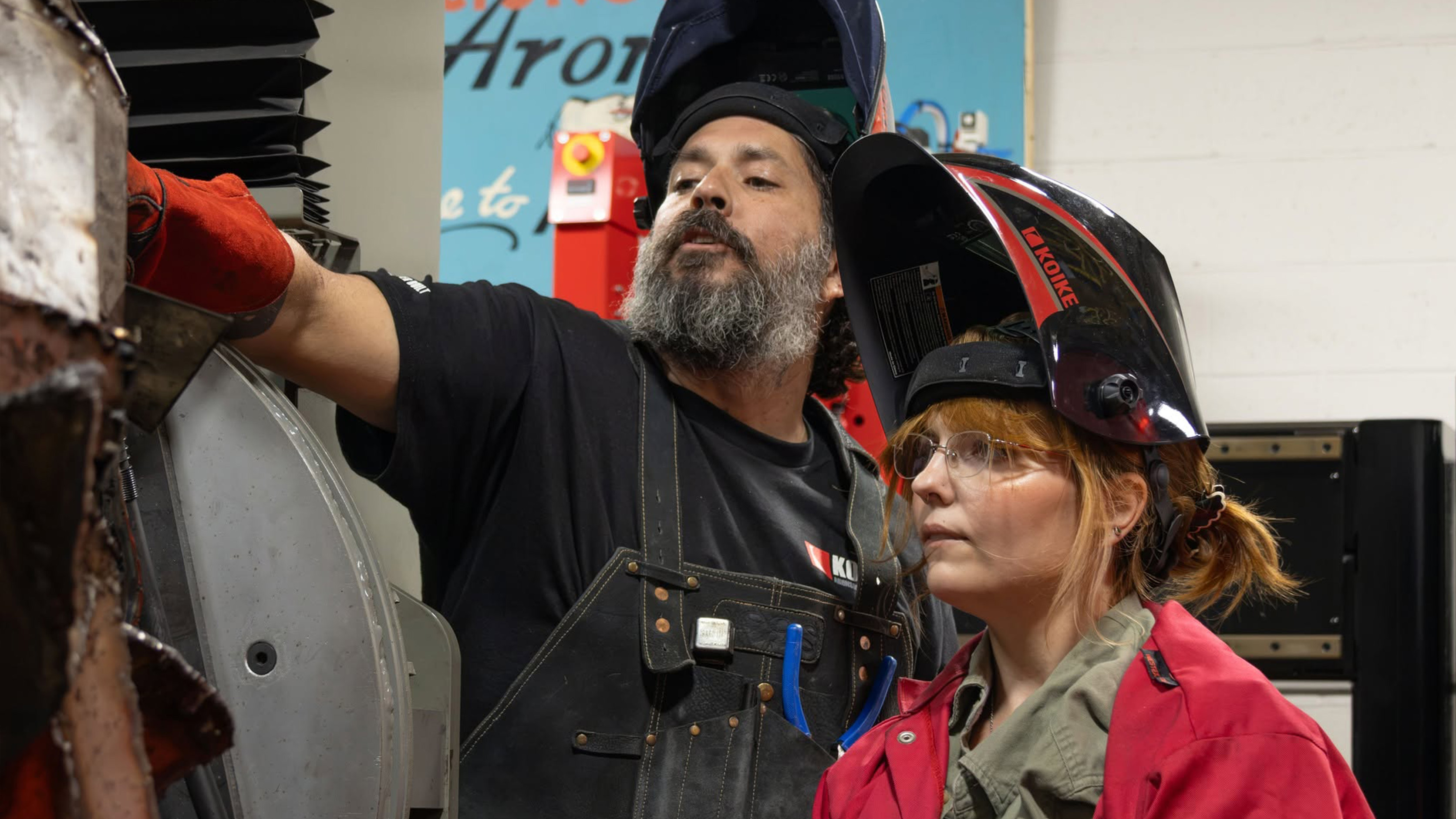
One of the most interesting things about Madero is his attitude toward sharing knowledge. David repeatedly talks about not keeping artistic secrets.
Rather than treating a cutting technique, welding method or artistic approach as something that must be protected, he encourages other welders to experiment with what they learn and make it their own.
That philosophy matters in welding.
The skilled trades have always depended on experienced people passing knowledge to the next generation. A veteran welder showing someone how to control distortion, improve fit-up or approach a difficult weld can save that person years of trial and error.
David’s goal is not simply to have people admire his finished metal artwork. He wants his work to inspire another person to pick up a torch, try something different and create something of their own.
Take a Risk and Leave the Comfort Zone
Madero also encourages welders to take creative risks and move beyond their comfort zones.
This project is a good example because he followed that advice himself.
He already knew how to sculpt, weld and shape metal by hand. What was new was incorporating CNC plasma cutting into his artistic process and using a welding positioner to manipulate a large sculpture.
Instead of working only with familiar tools, he experimented.
That does not mean taking unsafe risks. In fabrication, leaving your comfort zone might mean learning another welding process, trying a different cutting method, working with unfamiliar material or using equipment that changes how you approach the job.
Improvement often starts by being willing to learn.
The Therapeutic Side of Welding 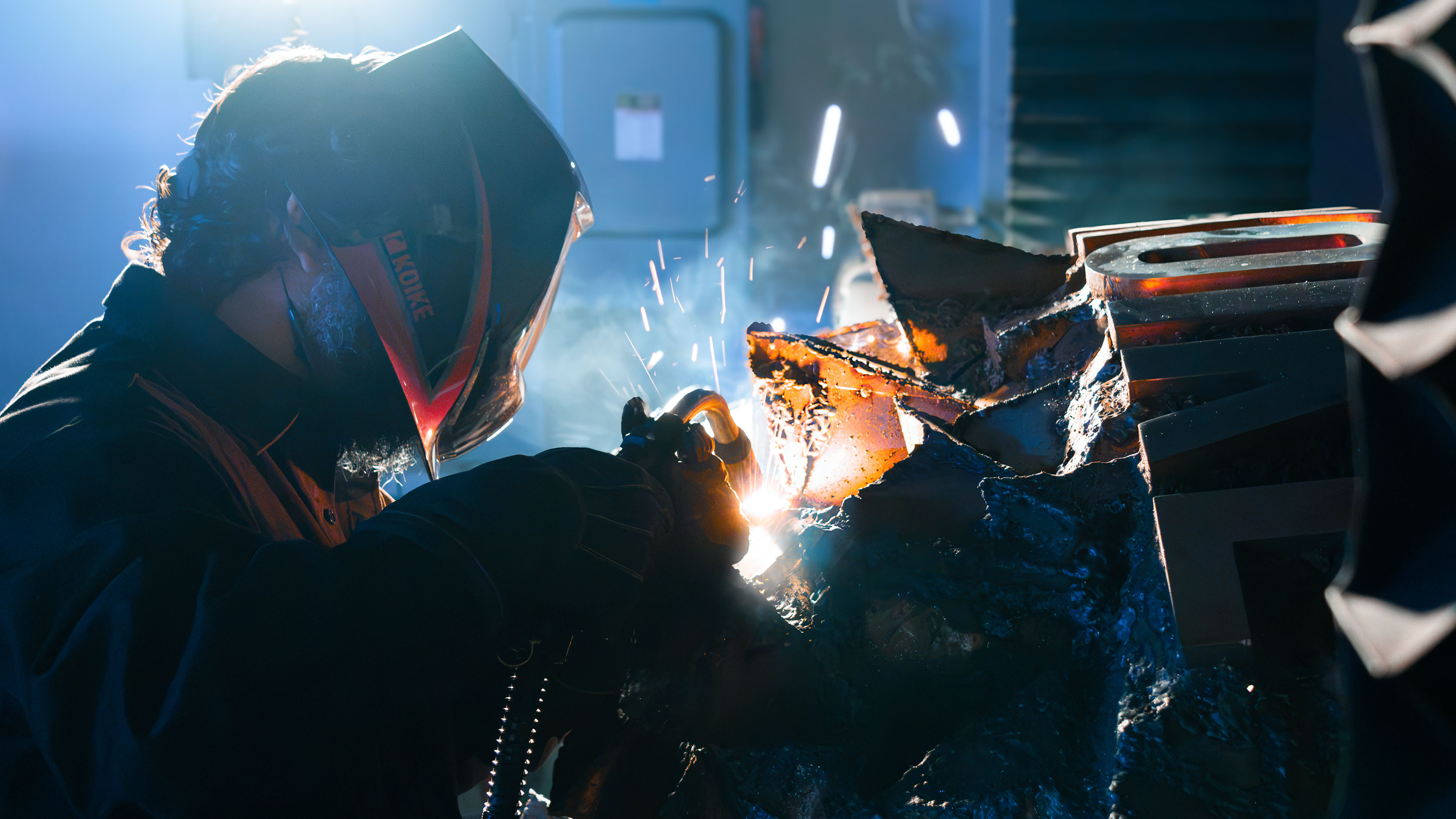
For some welders, creating metal art can also provide something beyond technical development.
It provides focus.
There is something naturally absorbing about fitting pieces together, striking an arc and concentrating on the puddle. When creating artwork, there is also the satisfaction of watching an idea slowly become something physical.
Some welders describe that experience as therapeutic or meditative. Welding requires attention to what is happening directly in front of you, which can provide a constructive creative outlet and a strong sense of accomplishment.
Creative work can provide focus, purpose and satisfaction.
More Than a Sculpture
Koike’s story has traveled a long way; from its beginnings in Japan more than a century ago, through generations of manufacturing in Arcade, New York, and into fabrication shops around the world.
Technology has changed, but the purpose remains remarkably consistent: helping people work with metal more safely, efficiently and precisely.
This stainless-steel sculpture captures part of that story.
It connects a metal sculpture artist willing to try new technology with a company that has spent more than 100 years developing tools for people who cut, weld and shape metal.
And Madero’s message to other welders may be just as important as the finished sculpture:
Take a risk. Try something different. Don’t keep the good ideas to yourself. Share what you learn and inspire the next welder.
Then cut some metal, strike an arc and see where it takes you.